


A Summer
at Camp
A Summer
at Camp

We started the field school at Camp Watts by metal detecting in a section of one of the fields. You never knew what the next signal might lead to. We found nails and spikes, metal objects, magnetic rocks and plenty of things that had us stopping to figure out exactly what we were looking at. Every new signal gave us another chance to find something connected to the site’s history.
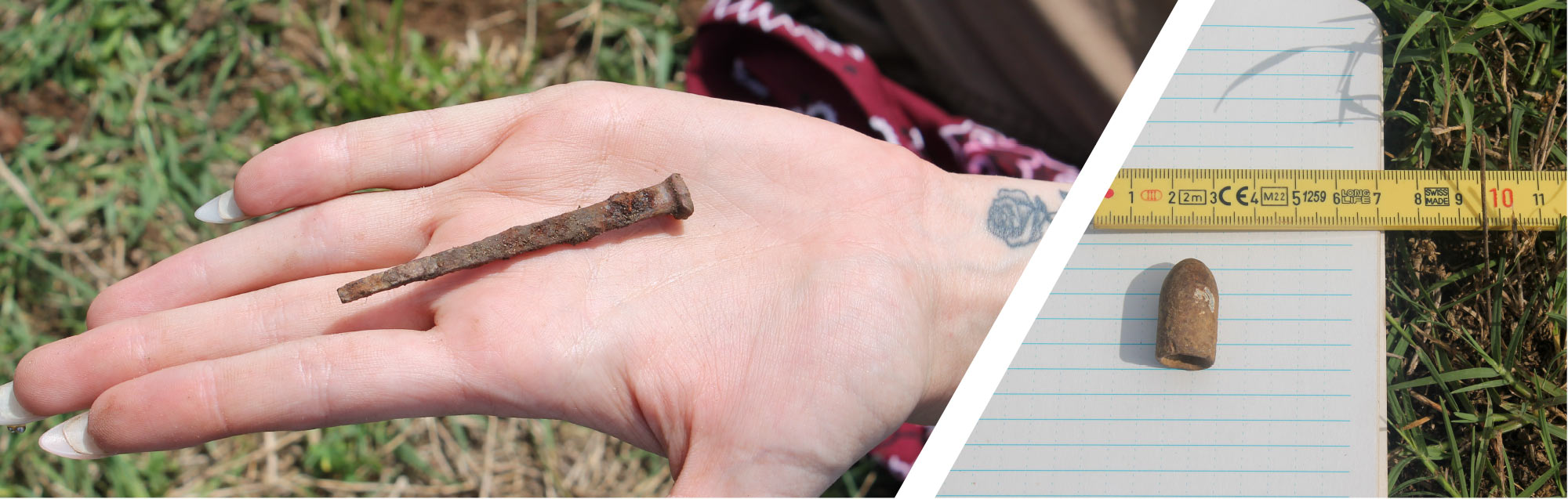
We also dug shovel test pits around the same area. This gave us a chance to see what else might be beneath the surface, especially since not everything underground will set off a metal detector. Switching between the two methods also kept us from doing the same thing every day.
Finding something is only the beginning of the process. We spent time cleaning what we collected and getting everything properly documented. Once the dirt was removed, some artifacts started to make a lot more sense. Others were still a complete mystery. Those usually led to everyone passing them around and throwing out ideas until we could get a better idea of what we had found.
The group was a huge part of what made Camp Watts memorable. When someone found something unusual, it usually did not take long for everyone to want to see it. A lot of time was spent trying to figure things out together. The random conversations while we worked made the days go by too fast and helped us bond with one another.
Several visitors came out to see the work being done at Camp Watts, and a few even got to dig with us. Getting to show them what had already been unearthed was a great way to share the project. History feels completely different when there is a physical piece of it sitting in your hand.
Then there were the cows. The baby cows quickly became a highlight of being at Camp Watts. Way too many pictures of them ended up on my phone, but I have no regrets. Having them hanging around nearby made an already fun experience even better.
Camp Watts also showed just how much history can be sitting right in your own backyard. You do not always have to travel somewhere far away to find a site worth exploring. There is plenty to uncover near Auburn, and the field school gives students the chance to be part of that work.
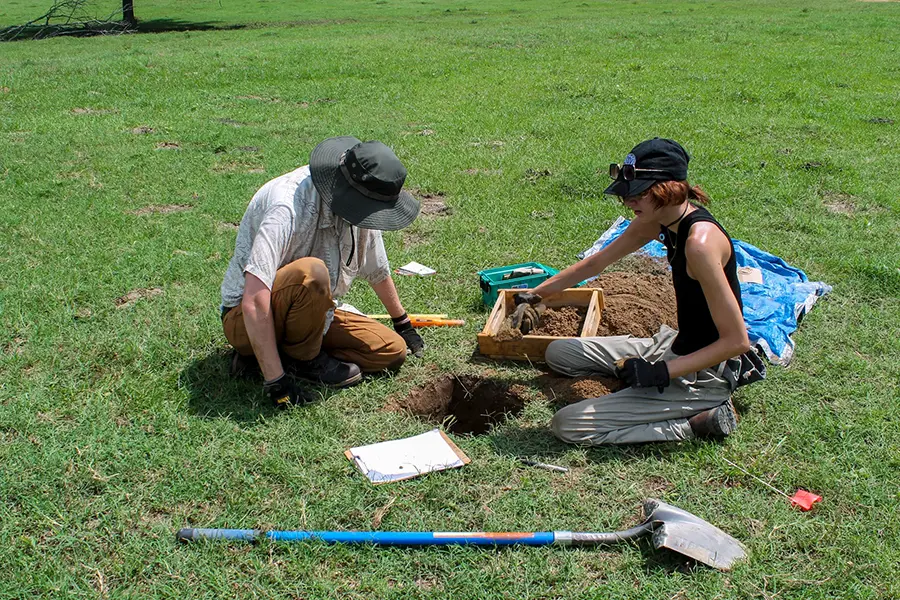
For students who have ever thought archaeology sounded interesting, Camp Watts gives you the chance to actually try it. No one expects you to know what every object is the second it comes out of the ground. Half the fun is figuring that out. Field school gives students the chance to take what they have learned at Auburn and put it to use at a real archaeological site.
If holding a piece of the past in your hands sounds exciting to you, I would absolutely recommend signing up for the next field school by contacting Dr. Meghan Buchanan. You never know what might be waiting right underneath your feet.