

AHA! Moments



The Caroline Marshall Draughon Center for the Arts & Humanities (CMDCAH) at Auburn University organizes the AHA’s events and membership. CMDCAH Director and AHA Secretary Mark Wilson said Auburn is the heart of a vast network of important work preserving and promoting history.
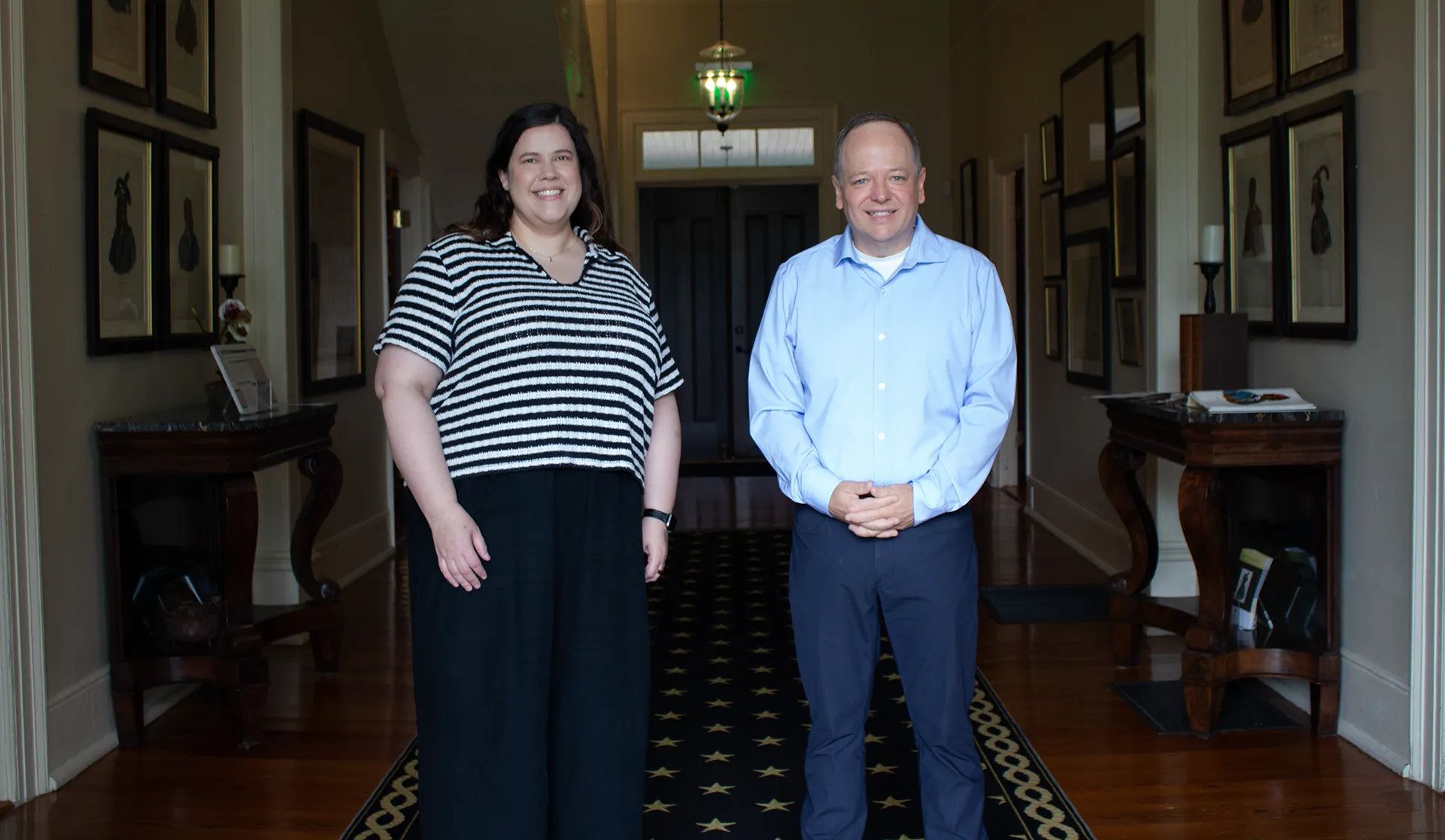
The AHA partners with museums, archives and local historical and genealogical societies around Alabama. People including Annette and David Bradford, Auburn English alumni who have been members for more than a decade, have formed a grassroots movement to preserve Alabama history.
“Not only do they admit all these professionals, they let us lay historians in too,” Annette said. “We are really helpful in when you’re writing on the local level: you can note trends, you can see this event and this event and this event that adds up to a trend, and those trends become movements.”
The Bradfords serve as editors for the Jackson County Chronicles, a local publication connecting historic events to the top-right corner of our state. They once attended a learning event on WWI at Pebble Hill, home of the CMDCAH, and began a series of articles on how the world wars affected Jackson County.
Later, they would add their local findings to Auburn’s special exhibit on the subject that traveled to Jackson County.
The Bradfords’ other projects include digitizing every newspaper in Jackson County from 1868 to the present and interviewing WWII veterans to record their stories. They said the knowledge exchange that happens at AHA meetings encourages members to save history that would otherwise be lost, forgotten or hidden.
“For us to take that kind of leadership in the humanities is extremely important and it is a very visible thing,” David said. “In a time where ideologically we seem to be regressing, frankly I think that they’re holding the line and feeding a very, very important cultural contribution. I really appreciate what they do.”
Articles based on original research are published in The Alabama Review, the AHA’s quarterly, peer-reviewed academic journal currently headquartered at the University of Mobile. Topics range from early settlement to the Civil War and from slavery to political and social reform movements.
Auburn’s Department of History hosted the Review’s editorial offices for two extended periods under the leadership of professors Malcolm McMillan and Jeff Jakeman. Steve Murray, director of the Alabama Department of Archives and History, started his career in public history as a graduate research assistant for Jakeman in the mid-1990s. Murray later became managing editor of the journal and served on the AHA Board of Directors, including terms as treasurer and president.
“I am one of many who have benefited from the extraordinary network of connections between Auburn and the AHA,” Murray said. “The university provided academic rigor and spaces for challenging some legacy assumptions about Alabama’s past. The AHA provided reminders that history belongs to all those who care to explore it, and opportunities for building lasting friendships based on mutual respect and commitment to our state.”
Murray credits CMDCAH founding director Leah Rawls Atkins with cultivating the spirit of partnership that persists between Auburn and the AHA.
“Leah championed the use of university resources to support local communities,” Murray said. “She saw AHA members as collaborators in the process of building awareness and encouraging Alabamians to claim their historical inheritances.”
Current CMDCAH director Mark Wilson serves as AHA secretary, and Outreach Manager Maiben Beard is the AHA’s membership secretary. Murray said they have built on the foundation laid by Atkins and continue to improve the AHA by attracting new generations and members of unrepresented communities.
AHA activities include sponsorship of historical markers in every county of the state, research scholarships and educational opportunities. Members meet twice a year in person, once for a conference featuring original research and collaboration, and again for a pilgrimage to a historic site in Alabama where they can trace their roots.
Murray said that at its core, the AHA is part of Auburn’s “best tradition” – sharing research and expertise to improve quality of life around the state.
“The College of Liberal Arts has been very much committed to the life of the state in so many ways,” Murray said. “We would be much poorer in terms of the quality of work that’s been done in documenting and preserving Alabama history if it weren’t for Auburn’s commitment over the decades.”