

Echoes of the Past and the Histories of Today




But history is not a myth, nor just stories conjured by images of a bygone era. Going to the archives and searching through the documentary evidence are imperative parts to constructing historical narratives. These narratives not only recover the events of the past, but provide insight into the world we, as Auburn students and alumni, share as global citizens.
In an increasingly digital world, the ‘place’ of research is increasingly being sidelined for the expedient. If some documents can be found online in digital archives, the importance of going to the place of research is often lost. History leaves traces, echoes, and memories on the landscapes where the past occurred.
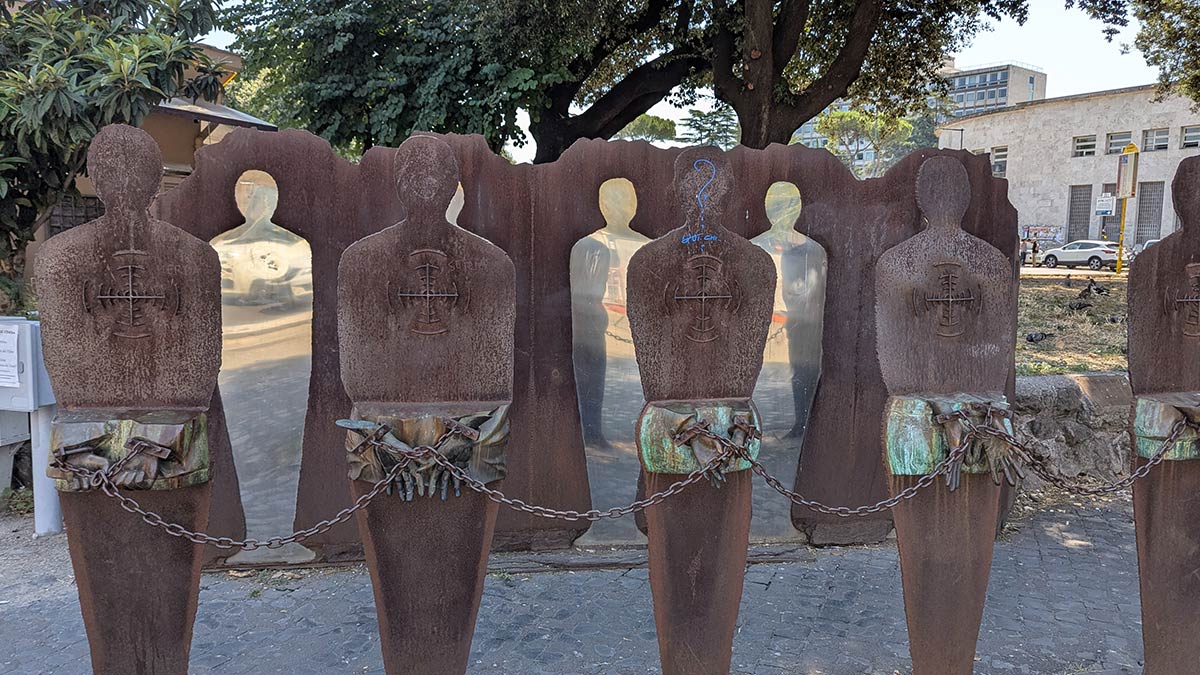
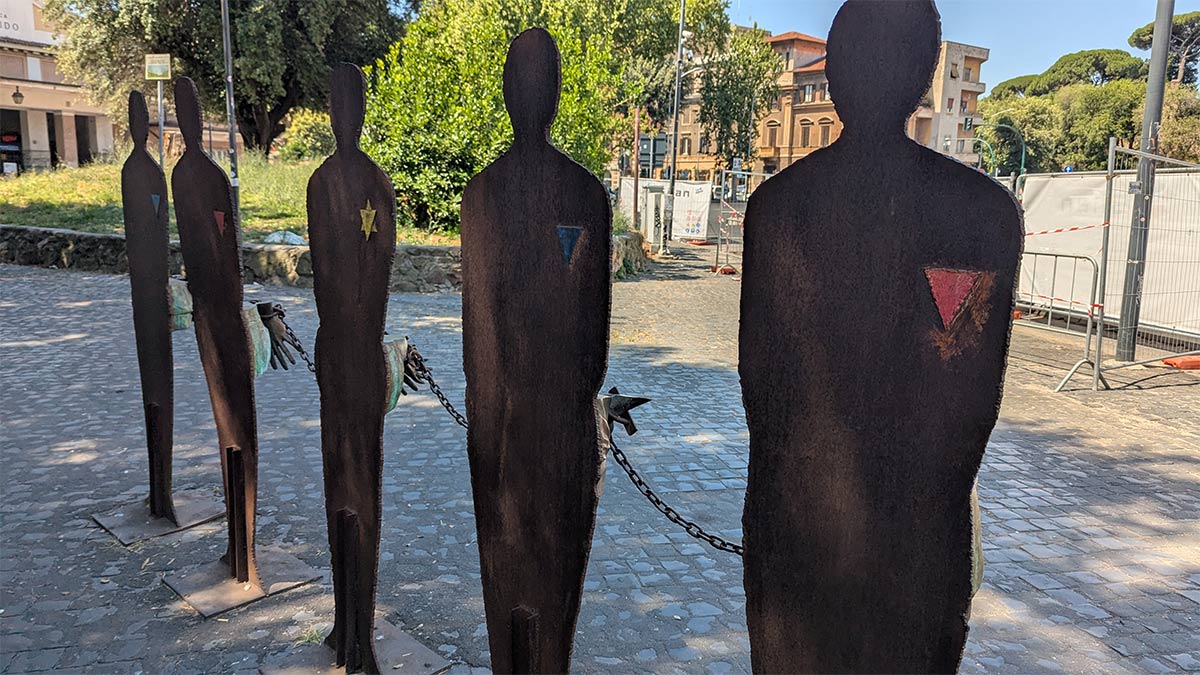
Every day on my way to and from the archives, I passed through the Piramide metro stop. The gaze of passersby often fixates on the ancient Roman pyramid that gives the metro stop its name. But every day, passing through the Piramide stop, I experienced an echo of Italy’s past. Across the street from the pyramid, conjuring images in the minds of tourists of the myths of Roman grandeur, is a memorial to those who lost their lives in the tragedy that unfolded in 1940s Italy. The monument commemorates the martyrdom and sacrifice of those in Italy who were killed by “Fascist barbarism,” as the plaque reads, in the final years of World War II.
Next to the plaque stand five metallic silhouettes. Each silhouette represents a distinct group targeted by Fascist violence: the silhouette in the center bears the Star of David, flanked on each side by symbols of the factions that composed the Italian resistance movement on both sides. These silhouettes face away from the person as they walk past, made evident by the targets upon their back and their hands chained.
But it is not just this choreography of an execution one must reckon with as they walk past. Every individual walking past the monument sees themselves in it, as across from the metallic silhouettes are mirrors bearing the same shape as the silhouettes facing them. This monument forces individuals to not only grapple with the violence of the past but places the contemporary viewer in the place of those murdered by the Fascists and Nazis in the final years of the war.
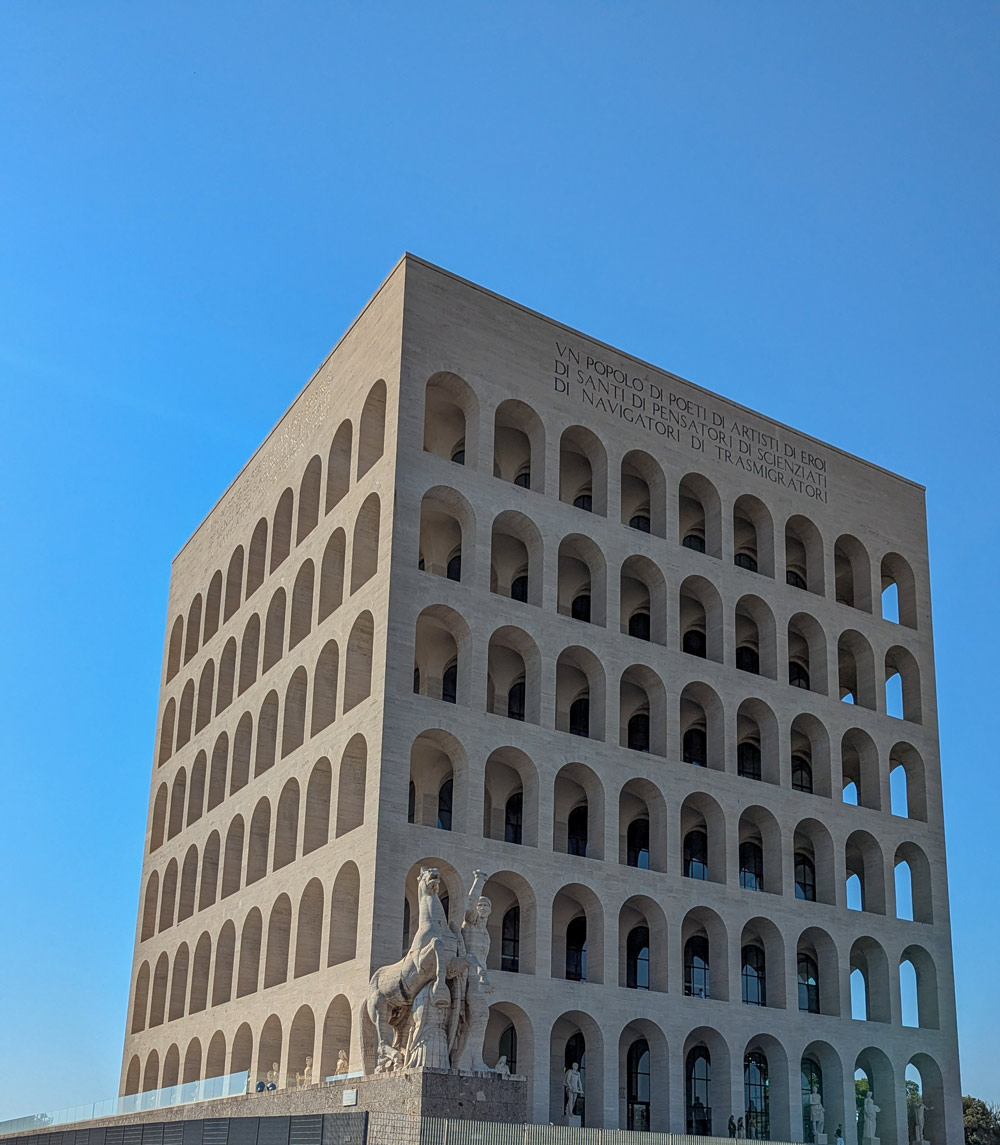
Names, places, and dates that feel distant, both temporally and physically while reading in Ralph Brown Draughon Library, become almost tangible as their echoes are felt when forced to confront them in one’s daily lived experience. Routine experiences with relics of the Fascist regime in Italy, from Mussolini’s Obelisk in northern Rome to the EUR district the regime had built in anticipation for the never-to-come 1942 World Fair, were indispensable in granting perspectives that remain ever illusive in digital scans of documents. Scans or photographs cannot capture the impressively large murals etched in the sides of buildings or the Fascists spin on classic Italian architecture, such as the ‘square colosseum,’ found in the EUR district.

As the saying goes, “All roads lead to Rome.” The archival pathways that brought together a global community at the Central State Archive proved to be no different. I met not only Italian scholars, but scholars from Columbia, Portugal, and Britain, to name a few places. Joining this scholarly community was intimidating and at times overwhelming; however, I was pushed by fellow emerging scholars from leading institutions like Harvard and Stanford as much as members within the community reached out to ensure I was welcome at the archive. I met leading scholars that not only helped me navigate the complex archival systems, but invited me to dinners to not only meet, but join their community.
Being in Rome, gaining new perspectives, colleagues, and life-long friends, was foundational in shaping myself as a professional historian and as a person. The image of a lonely scholar deep in the depths of the archive, paging through dusty documents was shattered. The Central State Archive was a place of bustling activity in which one would never be able to hear a pin drop. I often describe the archive as a poetically chaotic swirl of conversation and collaboration among scholars and with archivists. Being in the archive pushed me out of my introverted rut and encouraged me to engage and interact with those around me. I have never seen history and the historical profession as a more collaborative effort than the archives showed me it was.
Auburn University has proved to be a special place. The promise of a unique, life-changing educational experience is more than advertising and sloganeering. The transformative experience I had was made possible through the generous support of the Auburn community. Supporting Auburn University, the College of Liberal Arts, and the Department of History provides opportunities to students like me from disadvantaged backgrounds, transforms dreams into reality, and sets up students for long-term success in their respective fields and careers.