


Reading into it
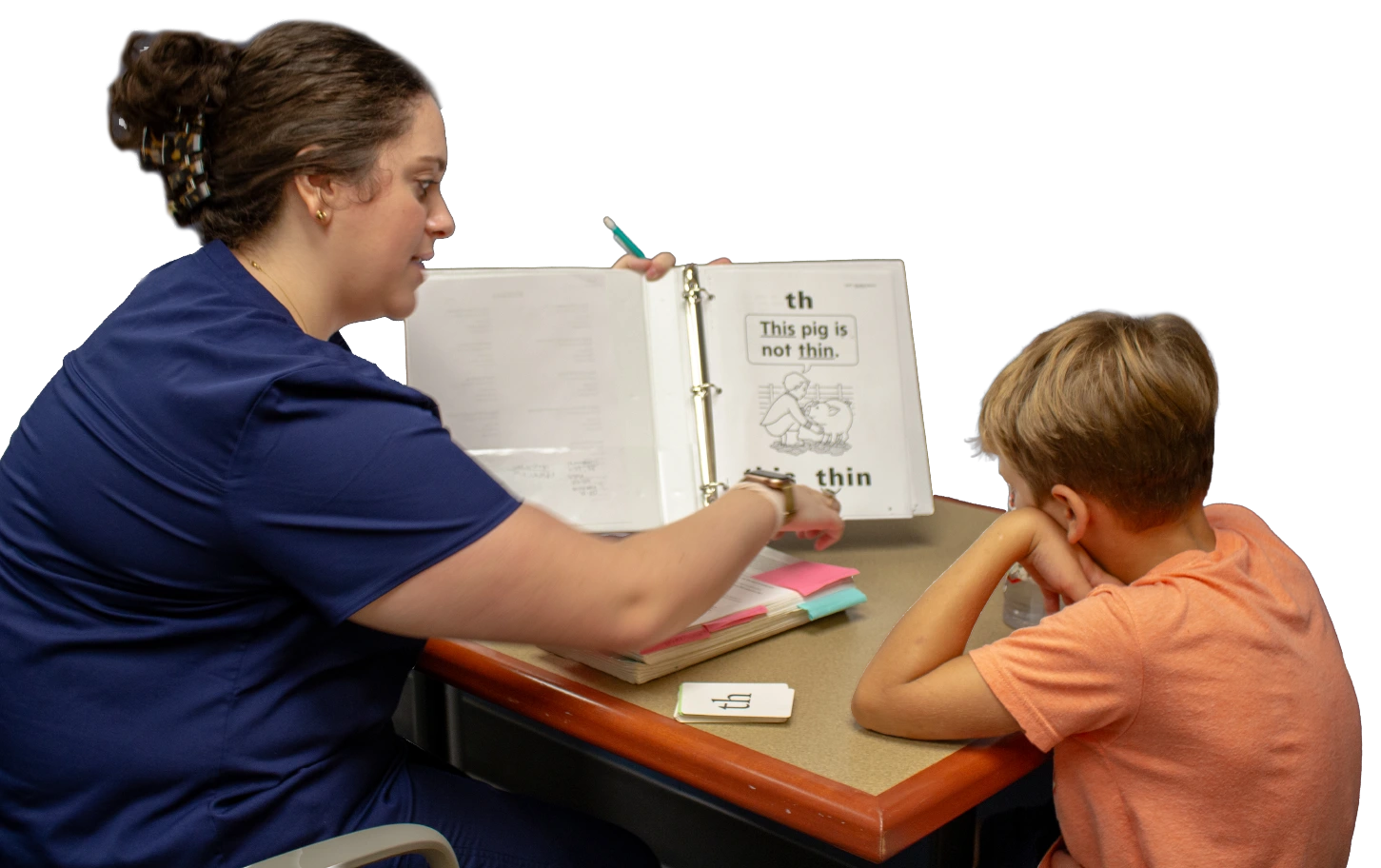
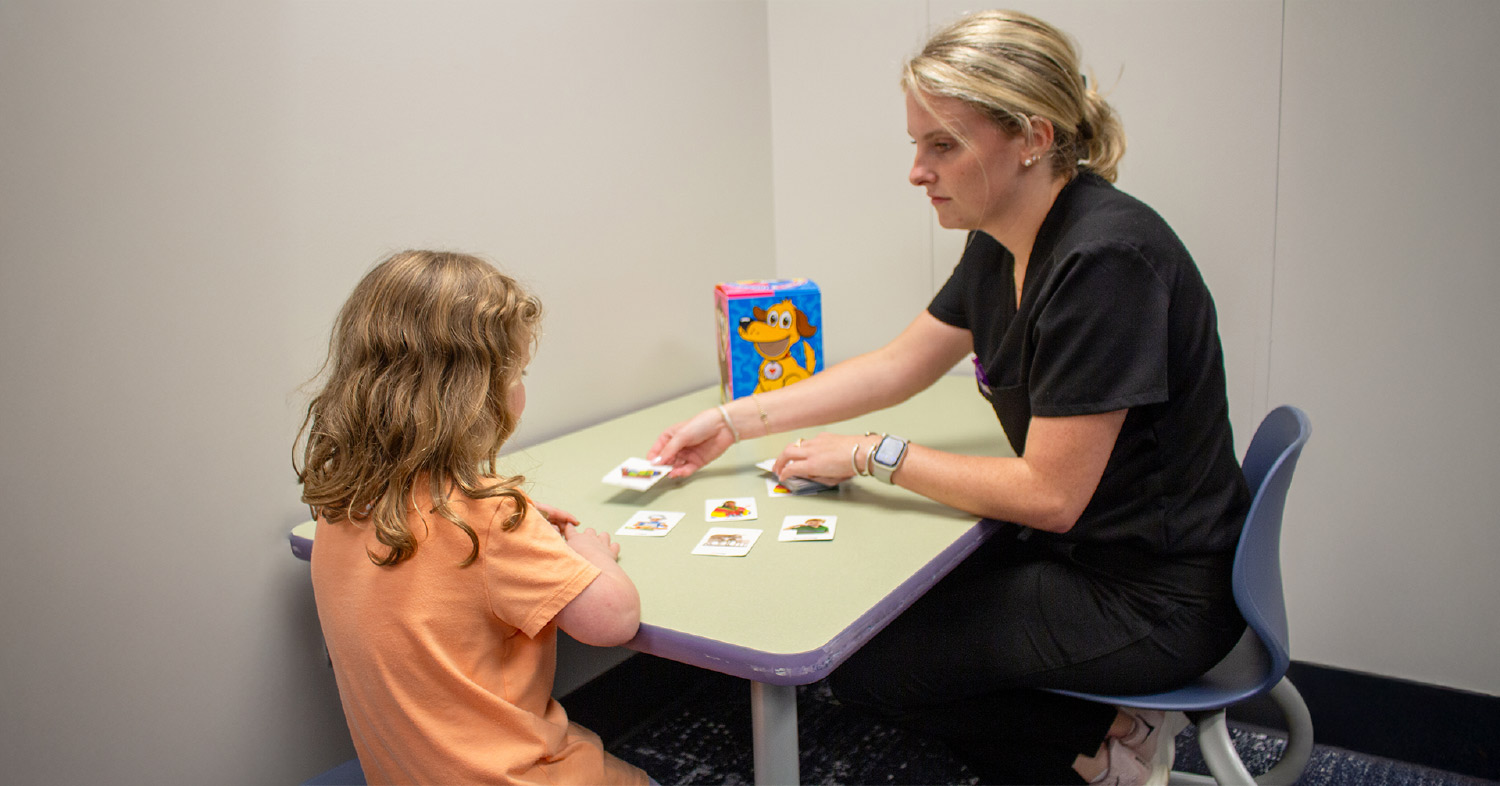
The Auburn University Speech and Hearing Clinic meets these children where they are – at the campus clinic, in our community or via telehealth, so that every child has access to evidence-based literacy evaluation and treatment.
“At Auburn, we’re in a really privileged position to be able to help so many families,” said Clinical Professor Laura Willis, who coordinates the Speech-Language Pathology Clinic. “We have the facilities through the clinic to directly offer evaluation and treatment, then our research facilities allow us to improve not just what we’re doing, but also better inform the available resources around the state.”
The Speech-Language Pathology Clinic uses the SPIRE and Seeing Stars programs, evidence-based interventions that engage the senses and help connect the visual appearance of a word to its individual letters and sounds.
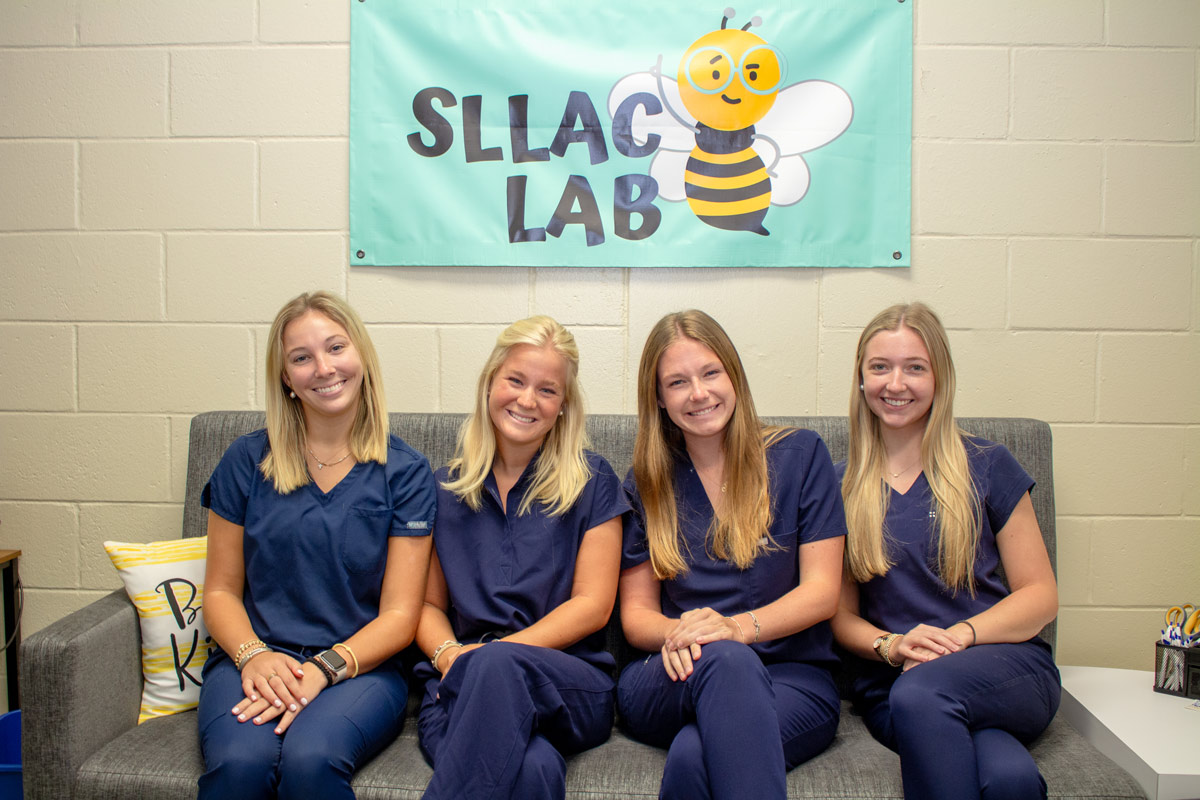
Led by Assistant Professor Anna Ehrhorn, the SLLAC lab creates comprehensive evaluation and treatment tools for literacy skills improvement. Ehrhorn said this is especially crucial for young children, as literacy difficulty early on leads to developmental, academic and mental health challenges throughout the lifespan.
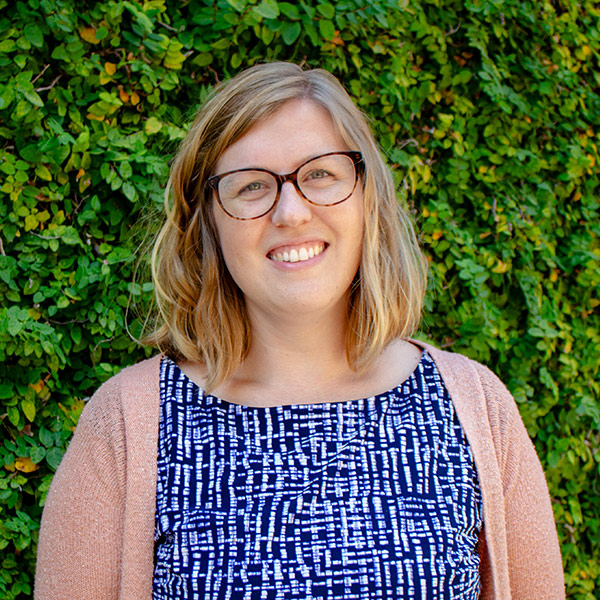
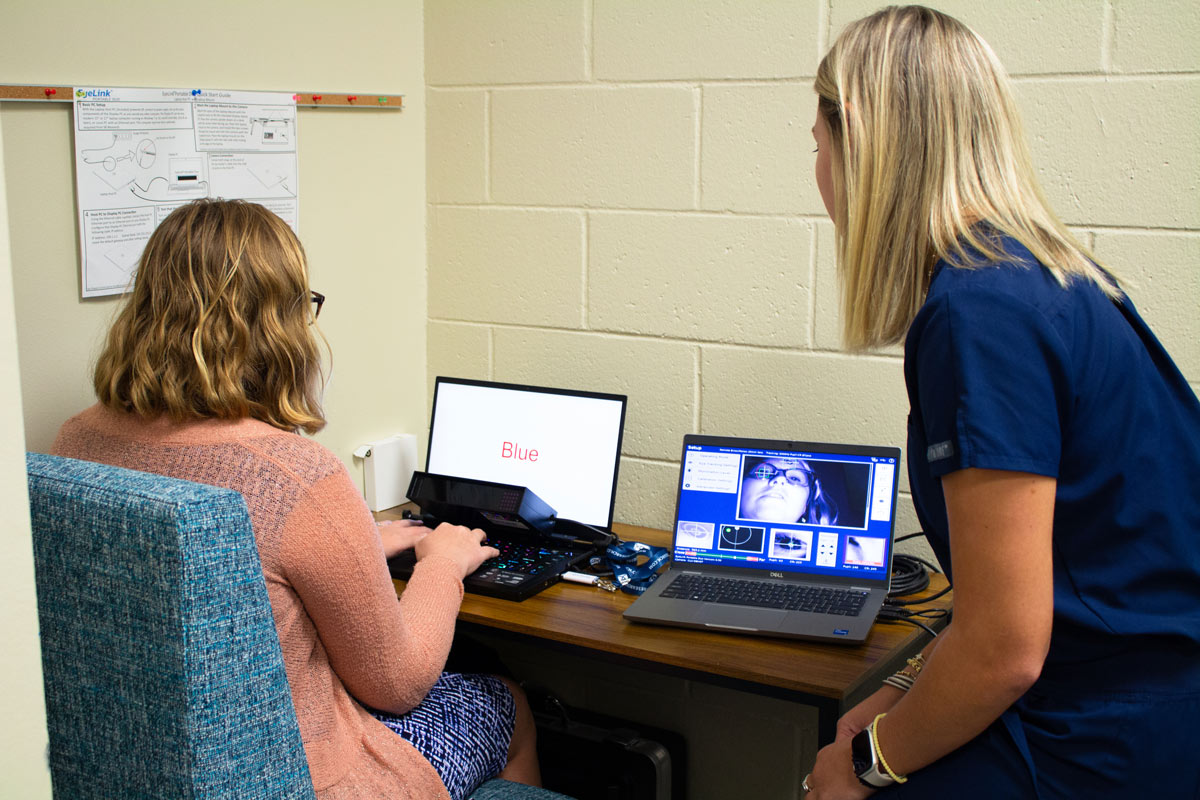
To better identify strengths and weaknesses, the SLLAC Lab uses tools such as eye-tracking technology. First, children hear a sound and have to choose which combination of letters makes that sound. The eye tracker builds a profile, which Ehrhorn and her student assistants analyze, to answer questions about how a child chose their answer and where issues need to be addressed.
Brynely Ballow, a senior in Speech, Language and Hearing Sciences who worked on the project, said it provides more information about a child’s development in a less stressful environment. Ballow said it also helps her prepare to care for her future patients.
“I want my patients to be seen, cared for and fully known, and you can’t do that unless you have a good foundation,” Ballow said. “This foundation helps with your competence, because if you can make them feel good about what they’re doing, and you really know what you’re talking about, you’re going to make a real difference in their life.”
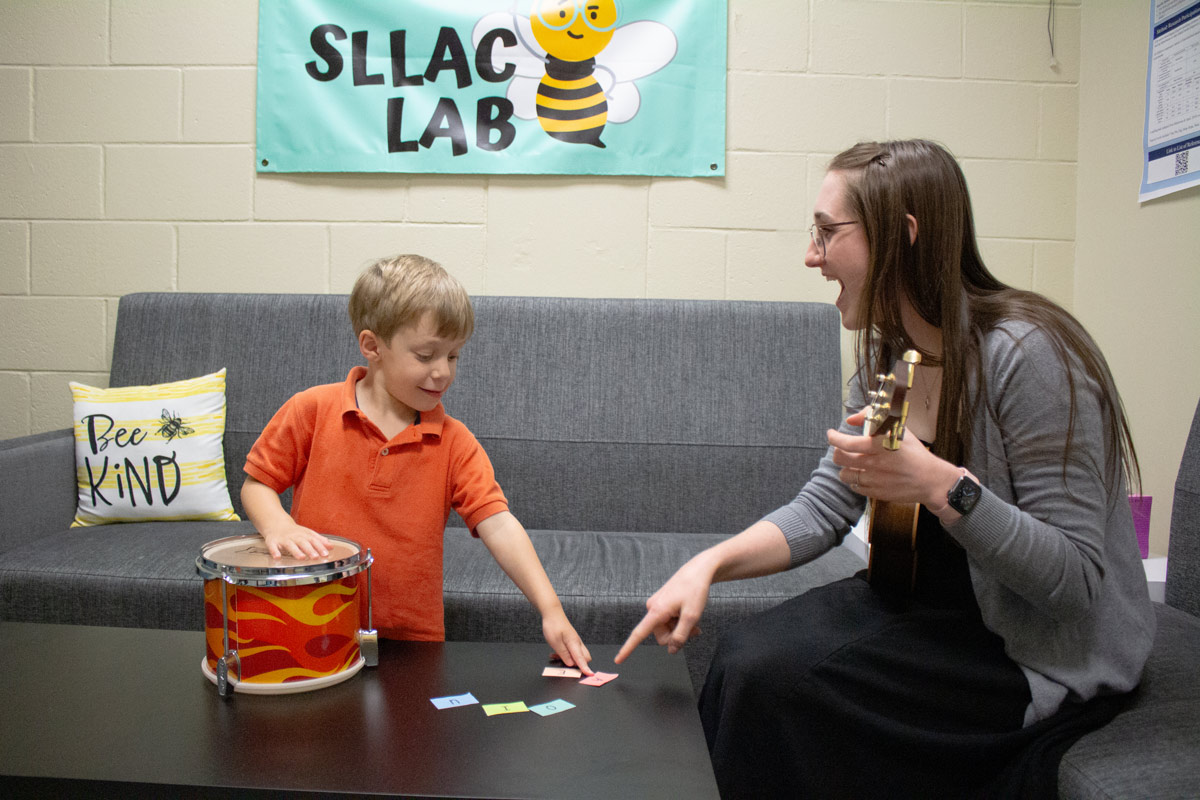
Erin Cannon, who worked as a music therapist before enrolling in Auburn’s master’s program in Speech, Language and Hearing Sciences, is exploring the benefits of music in literacy intervention.
Music therapy itself is limited, especially in rural areas, but research has shown that learning about music engages the same parts of your brain that help develop literacy skills at the foundational level.
Cannon’s focus targets speech-language practitioners to gauge their level of knowledge about music therapy and identify opportunities to make music therapy more mainstream.
“What we have been finding in research is there is a connection between learning and music,” Cannon said. “On one hand, we see this critical connection where music is actually training our brains to be better listeners, and we’re also seeing in research that music can be something that’s motivating and really supportive of explicit literary instruction.”
Novel approaches including music therapy benefit not just young children, but people across the lifespan. At Auburn’s own clinic, patients range from toddlers to older people who have experienced dementia or stroke.
In the community, Auburn faculty, staff and students visit hospitals, schools and other treatment centers to reach underserved populations. They provide low or no-cost evaluation and treatment to those who may not otherwise have access. Once students graduate, they have the experience to be informed clinicians at these settings across the nation.
SLHS senior Maggie Eddins hopes to one day work in a school setting and provide individualized care to students with reading difficulty.
“A lot of people don’t know how many areas speech pathologists cover,” Eddins said. “Every single person you’re working with is so different, and so being able, as an Auburn undergrad, to learn so much about individualizing care, you’re able to see the impact that you make by helping them in every way that you can.”
